False Hopes for Automation Through CRM (HubSpot, Salesforce) in Dentistry

Introduction
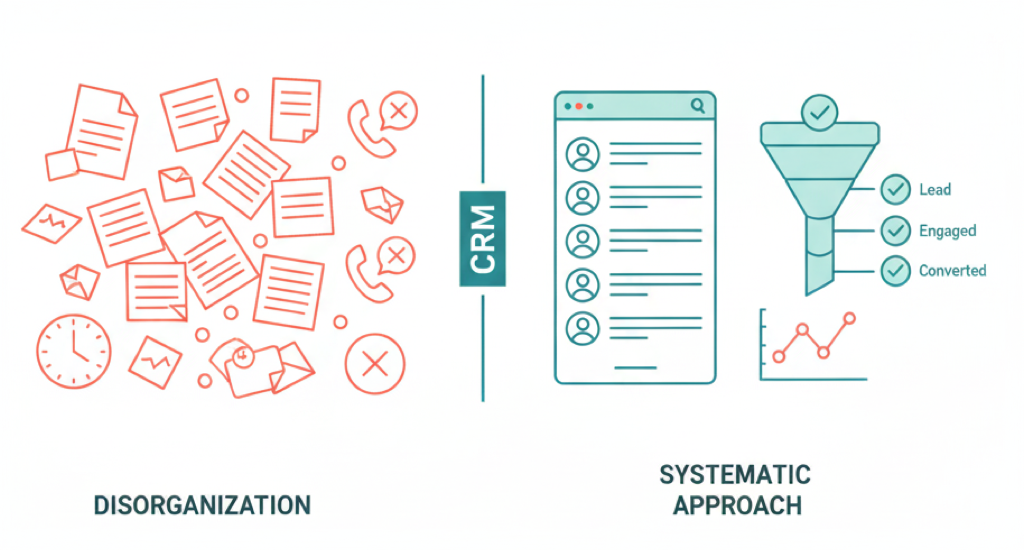
Today, many dental practices in the United States are implementing CRM systems (such as HubSpot or Salesforce) hoping they will automatically solve problems with lead processing, patient callbacks, and schedule filling. A practice owner might assume: "Just install a CRM – and new patients will book themselves, reminders and calls will happen without our involvement." However, in practice, this is a dangerous illusion. As experience shows, a CRM is merely a tool, and its effectiveness depends on how competently people configure and use this tool. Without proper processes and discipline, even the best CRM won't deliver the expected magical results.
In this study, we'll examine: how small practice owners should properly approach CRM implementation, why corporate standards from large chains like ClearChoice or Aspen Dental are difficult to apply in small practices, and how to overcome these challenges while increasing patient engagement effectiveness. We'll provide a practical implementation guide, a list of best practices and common mistakes, and compare the capabilities of popular CRM systems (HubSpot, Salesforce, etc.) as they apply to dental practices.
Why CRM Won't Solve Problems Automatically
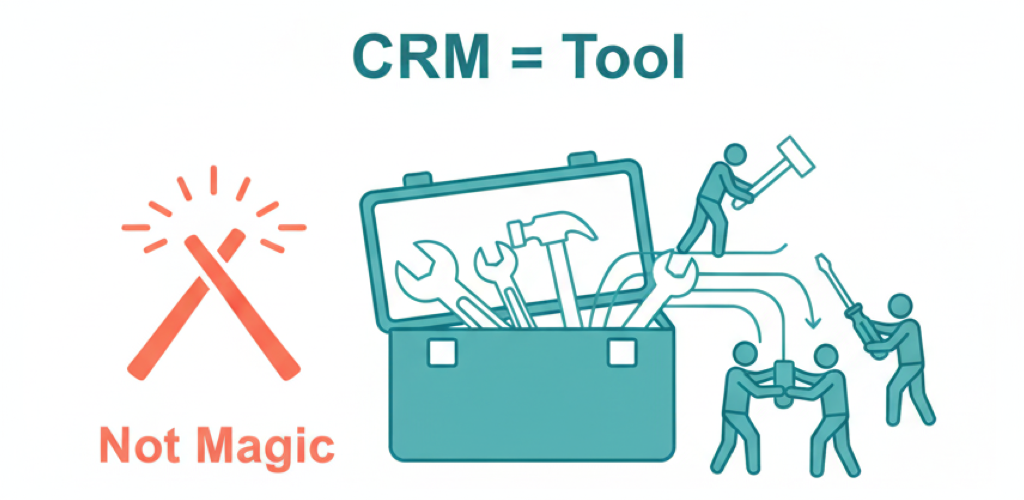
First and foremost, it's important to understand: a CRM system by itself won't fix weaknesses in your management. Without people's involvement and established processes, a CRM can even become a useless waste of money. Here are the key reasons not to rely on "autopilot":
CRM is Not a "Magic Pill" for Leads
Research shows that a significant proportion of CRM implementation projects fail to deliver expected ROI, and the main reason isn't bad software, but that employees don't use the system properly. Simply put, if practice staff doesn't maintain disciplined work in the CRM (don't enter contact data, don't set tasks, don't follow reminders), no automation will help – leads will still be lost. Small businesses universally face the problem of low actual CRM utilization: although the system may be formally implemented, the human factor prevents extracting real value.
Without Customization, CRM is Useless
Basic "out of the box" CRM settings are designed for average business processes. If you simply turn on the system and try to work with defaults, you'll quickly discover that half the fields and functions don't suit you, and your usual steps are awkward to fit into the template funnel. As one industry resource notes, using CRM without customization is like wearing someone else's shoes: you can walk, but it's uncomfortable. Each dental practice is unique, so the CRM needs to be configured for its real needs (patient journey stages, lead sources, rejection reasons, etc.). Otherwise, the system becomes a chaotic "toolbox" where it's hard to find anything.
Time and Training Are Required
Another mistake is thinking the team will immediately start working effectively in the new program. Staff training is essential. Remember the metaphor: buying a sports car is pointless if you only know how to drive a basic sedan. Similarly, when implementing CRM, you can't "skip training day." Without training, employees will either use the system poorly, make mistakes, or ignore it altogether. Yes, training requires time (and time in a clinic is a valuable resource), but without it, your expensive CRM can become an expensive dust collector.
Cost and Complexity – Obstacles for Small Practices
Many owners are attracted by the image of large systems like Salesforce – if business giants use it, then I need it too. However, they don't account for costs and complexity: advanced CRMs are expensive (licenses, implementation, support) and often require qualified specialists for configuration. As a result, for a small clinic, this can be an excessive burden. As marketing consultant Mark Oborn notes, for small practices, CRM price and complexity of functionality can become serious problems; the team will need additional training, and if implementation goes wrong, the system will only complicate work, drowning you in disorganized data. Simply put, incorrectly implemented CRM creates a sense of chaos, where useful information drowns in a mass of unnecessary details, instead of bringing benefits.
Conclusion: CRM can be a powerful assistant, but it doesn't solve business problems "at the snap of a finger." You can't just buy a HubSpot or Salesforce subscription and expect sales/appointments to grow on their own. Success requires adapting the system to your processes, team engagement, and changing your approach to working with leads. Next, we'll examine how to do this correctly, especially using a dental practice as an example.
Corporate Standards vs. Small Practices
[IMAGE SUGGESTED: Comparison infographic showing DSO resources (call center, specialized staff, integrated systems) vs. small practice resources (1-2 admin staff, basic tools, limited budget)]
Large dental service organizations (DSOs) like Aspen Dental or ClearChoice are famous for streamlined business processes and high lead-to-appointment conversion rates. It's logical to want to adopt their corporate standards for patient engagement. However, directly copying such experience in a small practice encounters difficulties. Let's examine what makes corporations effective and why small clinics find it hard to replicate:
Scale and Resources
Corporations operate at different volumes. For example, ClearChoice (a dental implant center chain) has a centralized call center in Denver with approximately 62 operators who exclusively handle incoming calls and appointment confirmations. They even have an external outsourced call center as backup for overflow or after-hours calls. It's clear that a private clinic with one or two administrators can't replicate this – they have neither the staff of dozens of employees nor the budget for a 24/7 call center. Small businesses physically cannot maintain a separate team to immediately call every lead and have long conversations with them.
Role Specialization and Protocols
In corporations, processes are standardized and divided by roles. In the same ClearChoice call center, operators are trained to handle objections and questions about implantation, they have scripts and no strict time limits on conversations – agents are allowed to talk as long as needed to fully answer potential patients' questions. Their goal isn't to quickly "close the call," but to maximally prepare the person for the visit and instill confidence. In a small clinic, often the same employee must answer phones, receive patients at reception, and verify insurance. They don't have time for long conversations – hence a more formal and brief communication style. Standardizing scripts and adhering to them is also more difficult: small teams often work without clear protocols, each administrator does things their own way.
Technology and Integrations
Corporate chains usually have powerful IT systems, often custom-built. Aspen Dental, for example, invests in unified platforms for all branches (schedule management, electronic medical records, CRM, analytics). ClearChoice in the mentioned call center integrated NICE inContact cloud telephony with Salesforce CRM, so operators could see all contact data and effectively plan subsequent interactions. Such integrations give complete control over the patient journey: from first call to visit and follow-ups, everything is recorded. Small clinics most often have a much more fragmented set: separate program for scheduling (or even a paper journal), separate one for finances/insurance, plus email, plus phone without CRM integration. Implementing a unified system is expensive and complex, and lack of integration means that even after buying a CRM, you may get an "island" of data not connected to other processes (for example, the administrator will have to manually duplicate patient entry from CRM to calendar). This slows down work and risks errors.
Culture and Control
In the corporate model, an entire structure is responsible for standard adherence: regional managers, trainers, mystery shoppers, etc. There are clear KPIs: what percentage of calls should convert to appointments, how many minutes to call back a new lead, how many patients shouldn't miss a checkup every 6 months, etc. Continuous work is based on these metrics – from staff mentoring to script changes. In a small clinic, especially if the owner is a dentist themselves, control over administrative tasks is usually weaker. Often there's no culture of viewing marketing leads as valuable – main attention is on current patients. As a result, there's no accountability for lead follow-up. Many practices don't have it "built into the culture" to persistently call new potential patients. Statistics show: on average across the industry, leads in dentistry are processed very sluggishly – many offices contact an incoming online request only once (or not at all). This is despite marketing research showing it requires 4-5 contact attempts to successfully reach and interest a potential patient who submitted a request. Best practices – those same corporate or simply advanced private clinics – bring up to 85% of such leads to appointment booking through persistent multi-stage work. And many small offices underestimate these requests (think a web form request isn't serious, "if they really need it, they'll call back themselves") and miss dozens of potential patients. In a real example described by consultant Bill Mulcahy, a dentist discovered a stack of printed online requests from an administrator's email – 80 potential new patients who were never scheduled because they only received one email and were never called! Small businesses often have neither control systems nor awareness of the scale of such missed opportunities.
Why are DSO standards difficult to apply directly? Because they rely on resources (people, money, technology) and organization that small practices don't have. However, this doesn't mean small clinics can't succeed. The best ideas need to be adapted to your scale. For example, obviously you won't hire 60 operators – but you can train 1-2 employees to work competently with leads. You won't immediately implement a super-CRM, but you can use 100% of an accessible tool's basic functions. Next, we'll offer a specific plan for improving lead and patient engagement effectiveness in a small clinic, based on "big player" practices, but without excessive costs.
How to Increase Effectiveness: Practical Guide for Small Clinics
[IMAGE SUGGESTED: Flowchart showing the 7-step CRM implementation process from defining processes to maintaining data quality]
Let's move from problems to solutions. Below is a step-by-step plan for CRM implementation and establishing lead engagement processes in a dental clinic. This plan is designed for small teams and accounts for small business realities:
Step 1: Define Your Lead Management Process
Before configuring software, document business rules: who and how will handle incoming potential patient inquiries. Describe the cycle: for example, "Website or phone inquiry -> first contact no later than X hours -> how many times we try to reach -> what we consider a rejection -> what auto-reminders or emails we send -> when a lead is deemed lost or, conversely, becomes a scheduled patient." Such protocol shouldn't remain theoretical – assign specific responsibilities. Even if you do all the administrative work yourself, write out this algorithm for yourself. Include several contact attempts through different channels. There's no point starting a CRM only to then abandon a lead after one unanswered call. For illustration: marketing firm Dental Revenue recommends the "12-48-5-10-30" rule for online leads – first contact within 12 hours, second after 48 hours, third on day 5, fourth 10 days after the second, then inclusion in monthly mailing/call list. Your schedule may differ, but the principle itself is important: multi-stage follow-up. Also decide what exactly happens at each stage: first email template, what to say when calling and whether to offer immediate scheduling, etc. When the process is clearly defined, it's easier to implement it in CRM.
Step 2: Choose the Right CRM System
The CRM market is huge – from free simple applications to monsters like Salesforce. For a small dental clinic, it's important to select a system matching your resources and requirements. Here are key selection points:
Ease of Implementation and Use: You don't have time or in-house IT specialists for lengthy setup – so the system must be intuitive. HubSpot CRM is often praised in this regard: it has an understandable interface that even non-IT staff quickly learn, plus there are many training materials. HubSpot was originally created for small and medium businesses, so much is already convenient "out of the box": for example, you can easily connect a web form from your site, set up auto-replies, there are ready email templates, etc. Moreover, basic HubSpot CRM functionality is available for free (no contact limits up to 1 million, some features are limited) – and paid plans start from ~$15 per month per user, which is quite affordable. As needs grow, you can add marketing module, service module, etc. But even the free version is enough for many small clinics to start. Salesforce, conversely, is oriented toward the enterprise segment, and although it has small business solutions, the general reputation is: extremely powerful system, but complex. Its implementation usually requires a certified specialist or consultant. Salesforce's specialized Health Cloud solution for healthcare offers enormous possibilities, but setting it up for a specific clinic often requires additional development and integrations, resulting in large timelines and budget. Simply put, Salesforce is a "Ferrari," impressive and fast, but requiring an experienced driver and expensive maintenance; HubSpot is more like a "reliable SUV," you can immediately drive it without long training, even if maximum speed is lower.
Industry Compliance: In healthcare context, data security (HIPAA) and accounting for patient care specifics are critically important. There are nuances here too: HubSpot relatively recently implemented HIPAA-compatible data storage functions (through special storage mode and permission settings), allowing secure storage and exchange of confidential patient information in CRM. Salesforce offers HIPAA compliance through Health Cloud, but as mentioned above, this more often requires expensive customization and third-party modules. On the other hand, there are also specialized CRMs for dental practices. For example, CareStack is an "all-in-one" platform combining CRM and practice management system functions (electronic chart, scheduling, billing, etc.). It's specifically tailored for dentistry and suitable for both individual practices and chains (scales from solo practice to DSO). Or, say, LeadSquared system – not strictly dental, but often used in medical marketing; it's strong in lead management for multi-location clinics, provides detailed funnel analytics (conversion, branch metrics) and advanced patient acquisition automation tools. However, specialized solutions usually have individual pricing (custom pricing) – i.e., they're not cheap, worth considering if you have a truly large practice or chain. For small offices, besides HubSpot, there are accessible cloud CRMs of general purpose: for example, Pipedrive – known for its simple visual CRM where contacts move through column-stages; it suits small practices wanting to visually manage patient work without unnecessary complexity (prices around $14/month per user, with free trial). Another option for very limited budgets – EspoCRM or similar open-source systems that can be deployed free and flexibly customized. But open-source solutions require a technical specialist for setup and support, so they suit "tech enthusiasts." A compromise is using the cloud version (EspoCRM, for example, has a cloud plan ~$25/user) to get support. Additionally, some practices use domestic CRMs like amoCRM or Bitrix24, which have sales funnel functionality and integrations, though may require interface translation and lack direct healthcare orientation. The main thing is choosing a tool you'll actually use daily, even if it's not the most sophisticated.
Integrations with What You Already Have: Consider your current IT landscape. If, say, you maintain scheduling in specialized dental software (Dentrix, EagleSoft, Cloud9, etc.), check if your chosen CRM can integrate with it or at least export/import data. Many CRMs (like HubSpot) support integrations through API or ready connectors, allowing, for example, automatic transfer of new website requests, telephony calls to CRM, and from CRM back to scheduling system information about scheduled visits. Full seamless integration is ideal, but even partial automation is better than nothing. If there are no integrations, plan a manual process: who and how will transfer data so CRM doesn't exist in isolation. One common mistake is leaving CRM disconnected: then you have contacts and deals "hanging" in it, and your clinic schedule/patient base has its own life, and these two lives aren't connected. The goal of CRM implementation is precisely to connect marketing with reception, so plan how you'll achieve this technically.
Step 3: Configure CRM for Your Clinic
Once the system is chosen, don't rush to work in it immediately "as is." First thing – customization for your processes. Create necessary fields in CRM for dentistry-specific data: for example, "service of interest," "referral source" (Google, recommendation, insurance company, etc.), "treatment plan offered (yes/no)," "plan cost" – everything important for you to track. Configure pipeline stages to reflect the real patient journey. These might be stages like: New Lead -> Contacted -> Scheduled for Consultation -> Consultation Completed -> Scheduled for Treatment/Treatment Plan Accepted -> Treatment Completed. For those who didn't convert, there may be exit statuses: No Answer/Unreachable, Declined, Scheduled with Another Doctor, etc. These are the statuses you can later analyze (how many leads "disappeared," for what reasons). Plan communication templates: CRMs usually allow preparing email and SMS texts. Create several: appointment confirmation, day-before reminder, post-visit thank you with review request, etc. This simplifies work and speeds up response to events.
Special attention to access rights and data security. Ensure proper user roles are configured in CRM. For example, if you have multiple employees, you might want to limit who sees financial information or personal patient data. In good CRMs (HubSpot, Salesforce, etc.), you can configure access levels for different roles (administrator, lead manager, doctor, etc.), important both for interface simplification and confidentiality compliance. Also enable encryption functions and audit log if available, especially if storing medical data – these are HIPAA requirements and simply good security practice. Small clinics might think this doesn't threaten them, but leakage or improper handling of patient personal data is a risk for everyone.
Finally, integrate CRM with communication channels. Minimum – connect corporate email so patient emails are logged automatically. If possible, integrate telephony: many CRMs allow at least recording incoming calls, and some – recording calls and linking to client card. If your CRM can't do this, develop a manual protocol: for example, after each call the administrator manually enters a brief note in CRM. The goal is to ensure all patient interaction history is stored in one place. Then with any new contact (whether client calls themselves, or you call them) you have access to previous conversations, promises, agreements. This is what distinguishes a systematic approach from chaotic, and here small business can quite adopt the corporate habit of logging everything.
Step 4: Train the Team and Assign Responsibilities
Now that the system is ready, invest in staff implementation. The clinic owner or manager should understand the CRM themselves and lead by example – at least share the importance of its use. Conduct staff training: show the interface, practice typical scenarios (new lead came in – what do we do in CRM? patient called to reschedule – how to note it? etc.). Pay attention not only to button-clicking technique, but also lead management work culture: explain why you'll now call everyone who left a request, how this affects practice growth, how CRM will help them in daily work. Employees often resist new systems ("we were fine before"), fearing extra burden. Your task is to show personal benefit: for example, that CRM will relieve them of some routine (no need to manually keep lists – the system will remind whom to call), reduce conflicts (won't forget about patient because signal will trigger), etc. If people see CRM simplifies their life, they'll much more willingly adopt it. You can cite a small success: for example, in one clinic they started CRM use with a simple function – automatic appointment SMS reminders – and staff quickly felt the benefit as patient no-shows decreased. Such stories motivate.
Also assign process responsibilities. In a large company there's a sales department, supervisors – you possibly have only 5-10 employees. Nevertheless, distribute roles: who reviews new leads daily (e.g., front desk administrator), who makes calls (might be same person or medical coordinator if available), who controls quality and outcome (e.g., you as owner review report weekly). If the clinic is small, often all burden falls on one front desk employee – then clearly specify this in their tasks: CRM lead processing is as much a duty as greeting a patient. Without personal responsibility there's risk everyone will think someone else is handling it. Result: nobody handles it – and the system stalls. CRM's task assignment function helps avoid this: for example, when a new lead comes in, you can set up automatic creation of "call back within 1 hour" task for a specific employee. Then it's clear to the person what's required, and easy for you to control incomplete tasks.
Finally, encourage CRM use. At least morally: note at meetings how CRM helped schedule so many new patients, thank for carefully filled data. You can introduce an element of game or competition (if there are several employees): for example, small prize to whoever best and fastest processed their leads this month. Research says people resist new tools until they see personal benefit. So your role is to show this benefit and form a habit. Statistics are relentless: if the team doesn't accept CRM, the project will fail regardless of program quality. So training and motivation are critically important investments at implementation stage.
Step 5: Automate Routine, But Don't Lose Personal Touch
Modern CRMs offer excellent automation possibilities: use them wisely. What's worth automating:
Reminders and Mailings: Set up automatic SMS/emails with appointment confirmation and visit reminders – this will reduce no-shows and increase patient engagement. You can also automatically send "Welcome" email to new contacts or series of educational emails (e.g., about your clinic services) – to warm up interest. HubSpot, for example, allows easily building such sequences. Important: ensure messages look personal. Addressing by name, relevant content. Automation shouldn't resemble spam.
Task Distribution: As mentioned, you can automatically create tasks in CRM like "call new lead," "clarify treatment plan decision 1 week after consultation" and assign to responsible party. This ensures nobody forgets to make the necessary call at the right time.
Response Templates: Instead of writing identical emails from scratch each time (e.g., sending treatment plan or pre-surgery instructions), prepare templates in CRM. When needed, manager will slightly edit them for the situation, but main parts will be ready. This saves time and ensures unified communication standard.
However, don't completely rely on auto-mode, especially in healthcare where people value attention. Don't try to replace live communication with robots at critical moments. For example, if you have a patient interested in expensive treatment (implantation for large sum) – an email with price list won't convince them to come, here you need a personal call or consultation. The "people vs. machines" balance is golden rule. Some modern "CRMs for dentists" apply an interesting approach: first the system directs user to manually make several contact attempts (call, personal email), and only if person doesn't respond, includes auto-mode for further touches. This combines effectiveness (not forgetting about lead) with human relations. You can simulate this rule: say, decide that first 2 call attempts are always personal, third touch can be auto-SMS. Automation should relieve employees from routine, but not completely remove their role in building patient relationships.
Step 6: Track Metrics and Improve Process
[IMAGE SUGGESTED: Dashboard mockup showing key dental CRM metrics - lead conversion rate, response time, show-up rate, cost per patient acquisition]
CRM implementation isn't a one-time event, but a continuous improvement process. Determine which metrics are important to you and regularly measure them using CRM: lead-to-initial-appointment conversion (%), new lead response time (hours/minutes), show-up coefficient (how many scheduled showed up for visit), average patient acquisition cost (if counting marketing expenses), patient satisfaction (through surveys), etc. Good CRM allows visually building reports and identifying bottlenecks. For example, you might see that of 100 leads, 50 dropped off at the stage after consultation (didn't return for treatment) – then this signals to work on treatment plan presentation stage or follow-up calls. Or notice one channel (say, Facebook ads) gives many leads, but almost nobody converts – maybe lead quality is low or processing problem. Regularly analyzing CRM reports, owner gets "feedback" on their management decisions. For example, you decided to introduce a new service – through funnel reports you see how many requests it got and how many reached payment. Without CRM such things are harder to measure. Moreover, set specific goals and compare: for example, before CRM our lead booking was 20%, six months after use – 35%. That's excellent progress, but maybe there's still room to grow. By designating KPIs, you can motivate the team: "Look, a month ago 10 people from requests came, and this month – 15, great job, heading toward goal of 20." If you don't watch numbers, understanding whether your strategy works will be difficult. Many CRM projects fail simply because after implementation nobody really worked with them – configured and forgot. Avoid this: at least monthly/quarterly audit data and adjust process. CRM is flexible: you can add a new stage if you discovered necessity, or change script, or strengthen auto-reminders if seeing many misses. Periodically gather team, look at metrics and decide what to improve. This way you'll gradually bring your small clinic's effectiveness closer to best examples. Remember, successful CRM use is continuous movement, not static state.
Step 7: Maintain Data Quality and Comply with Standards
When process is running, it's important to keep the system clean and reliable. Introduce rule: "Every contact – with record." That is, after each interaction (call, email, visit) responsible person must update information in CRM: call result, new agreement, patient complaint, etc. If this isn't done, over time the base accumulates "garbage": unclear what happened with whom, who's "warm," who's hopeless. Regularly delete duplicates (CRM often can create two profiles for one person through different channels – merge them). Check that key fields are filled. In dental CRM, contact data (phone, email) are important – so auto-reminders reach. If field is empty – ask to fill when occasion arises (e.g., patient called – clarify email and enter). Monitor status relevance: as soon as person scheduled and came for appointment – move them from potential to active patients (or to another funnel for working with existing patients). Dirty CRM base is no better than scattered papers – it's just as easy to get lost and make mistakes. So discipline in data maintenance should be part of daily work.
Don't forget legal aspects either. Communication automation is also responsibility: comply with advertising and privacy laws. In the US, for example, HIPAA law requires medical organizations to protect patient personal data. Ensure your CRM is configured according to standards: encryption, strong passwords, auto-lock when inactive, access differentiation – all this should be enabled. Same for email mailings: use only addresses patients provided themselves, give unsubscribe option, etc., to avoid violating CAN-SPAM Act. In general, effectiveness aside, reputation and law come first. Fortunately, modern CRMs pay attention to this, and with proper setup (and sometimes through additional agreements, like Business Associate Agreement with CRM provider for HIPAA) you can work peacefully.
Following such a plan, even a small dental clinic can build its mini-version of patient engagement "machine," similar to what large corporations use. Yes, you'll have not 60 operators, but 1 administrator, not super-computer system for millions, but accessible cloud service – but principles remain the same: quick response, multiple touches, personal approach, data accounting and constant improvement.
Best Practices for Lead and Patient Engagement (CRM-Based)
Let's summarize some best practices – proven techniques that have shown effectiveness in dental business:
Quick Response to New Inquiries: Try to contact each new lead as soon as possible. Ideally – within the first hour, maximum – first business day. Speed seriously increases conversion chance: person is still "hot," interested in service now. If you drag 2-3 days, high probability patient already contacted another clinic. Research confirms: clinics where first response occurs within 12-24 hours are significantly more successful in patient scheduling. So set up notifications about new leads (let CRM send email to responsible party or pop up task) and accustom team not to delay first contact. Quick call or request response will make good impression on potential patient: "If they called back so soon, they care, value my time." This is important small business advantage – you can act flexibly and quickly, while in some corporations processes are bureaucratic. Use this: make speed your trump card.
Multiple Contact Attempts (Persistence): Don't give up if you couldn't connect from first attempt or they didn't immediately agree. Golden rule: make 4-5 touches before admitting lead is hopeless. Many people are naturally busy or indecisive – your persistent (but polite!) approach can push them to action. For example, call – voicemail – repeat call at different time – SMS with offer to reply if convenient – email with additional information. This mix of channels and timing covers person more fully. Of course, you need to feel the line not to appear intrusive: usually 4-5 times with intervals of several days/week is normal, but calling 3 times a day is excessive. But the most common mistake is, conversely, lack of attention: called once, didn't reach – and that's it. Don't do this. CRM will help plan repeat steps: immediately set tasks "call again in 2 days" etc. or use automatic sequences. Remember, leads are precious (they cost you marketing money!), and need to be persistently worked. Best clinics achieve 80%+ interested reach appointment precisely through multi-stage follow-up system.
Communication Personalization and Trust: Although we say "lead," think of each such contact as a specific person, potential patient. Best corporate training standards focus not on "pushing," but on building trust. Apply the same in your practice. Each time connecting with new patient, maximally personalize communication: address by name, mention where you learned about them (e.g., "You left request on our website, interested in implantation – thank you for contacting!"). Identify need – ask a couple questions about their problem. It's very valuable to let person feel you're sincerely interested in helping, not just filling schedule. Even a short call can be made warm: empathy, attentiveness, readiness to answer questions. If lead asks about complex procedure (e.g., "How does implant placement go?"), don't brush off – give detailed answer like an expert would. Corporate call centers teach their agents this: don't rush, fully address patient's fears and doubts over phone. Small clinic even wins here – you can have the doctor themselves call back on especially important questions. Imagine impression: doctor personally called to discuss my case! This raises trust to new level – something you can't buy with any marketing budgets. Of course, doctor doesn't have time to call everyone, but selectively – why not, especially if it's expensive treatment where patient hesitates. To summarize: building dialogue not as sale, but as care, you'll both increase conversion and lay loyalty foundation. CRM comes in handy here by storing all contact history – use this data to personalize further steps (e.g., in comments you see patient mentioned pain fear – on next call ask if they'd like to discuss sedation options, etc.).
Appointment Scheduling – Main Goal for Each Lead: Seems obvious, but sometimes employees hesitate to "push" for appointment. Best practices show: you need to actively offer and facilitate scheduling. Each time talking with potential patient, try to move them from lead status to specific scheduled visit status. For example: "Let's find convenient time for consultation – we have openings next week…" Be sure to have schedule at hand or quick access to it. If administrator can't schedule themselves (say, doctor does it), organize process so lead doesn't wait. Worst thing is to say: "We'll call you back later for scheduling" – person might change mind. Better to immediately confirm agreement. Technology can help: for example, send online scheduling link (if you have it) right during conversation. But human factor decides more: proactively invite for visit. Many clinics lose leads because they communicated, gave information, but didn't explicitly invite patient to come. Don't fear looking pushy: if person contacted, they expect you to offer services. This isn't cold sales, but logical conversation conclusion – "when do we expect you?" Corporate standards usually require each conversation to end with either appointment or clear next step. Stick to this in your practice. And, of course, maximally simplify scheduling process: minimum bureaucracy, friendliness, ability to fill forms online in advance, etc. CRM can integrate with calendar to automatically create entry – use this to avoid double work.
Monitor Schedule and Reminders: Working with lead doesn't end when they agreed to come. Need to bring them to clinic door. Reminders and small attention help here. Always send appointment confirmation (by email or SMS) right after conversation. Then standard: day before visit – reminder (automatic or manually through CRM). If person scheduled month ahead, makes sense to remind at week mark. Large chains have entire visit confirmation centers that call everyone the day before. In small clinic, administrator can do this between tasks or automatic SMS. Main thing – don't assume patient remembers themselves. In CRM you can establish rule or segment "scheduled visits" and track who confirmed attendance. If someone doesn't respond to reminders, you can call personally. In general, fight for each scheduled person to actually show up. This directly affects revenue. According to various studies, regular reminders reduce no-shows by ~30%.
Build Long-Term Relationships: CRM is called Customer Relationship Management not only for new sales, but also for patient retention. Best dental practices (and corporations) know: attracting new patient is more expensive than retaining existing one. So parallel to processing new leads, also establish CRM for current patients: regular preventive checkup invitations, congratulations, notifications about promotions for regular clients, etc. If your CRM allows base segmentation, use it: for example, highlight group of patients who haven't visited in 6+ months – and send them personal offer (hygiene discount or simply reminder about dental checkup necessity). Establish automatic triggers: patient had complex treatment done – 2 days later email: "How are you feeling? Don't forget to follow recommendations." Such service creates loyalty. Large chains (Aspen etc.) build entire repeat touch systems so patients return. Small clinic may not have marketing department, but you know your people better – personalize! CRM will help not keep everything in head: it'll remind whose checkup is due, who has birthday, who was interested in whitening before, etc. Fill in these details and follow interaction plan with existing patients, not only potential ones. Ultimately, CRM goal is increasing patient lifetime value, not one-time booking.
Summarizing this part: best practices come down to being prompt, persistent, attentive and systematic in patient work. CRM here is your assistant that takes on organizational moments (reminds, records, distributes), but business soul – patient care – you and your team provide.
Common Mistakes in CRM Implementation and Lead Processing
Now about what not to do – let's list most common mistakes that can nullify all efforts:
Expecting "Miracles" Without Effort: As we already discussed, main mistake is thinking CRM itself will solve problems. Some owners, having heard advertising, think it's enough to pay for system – and then everything will happen automatically: requests will convert to visits themselves. This isn't so. CRM isn't a wizard, but a tool. If you simply install it and change nothing in work, result won't change. Moreover, incorrectly configured CRM can create illusion of vigorous activity (everyone fills something, clicks), but in fact patients won't increase. So avoid passive approach. CRM requires active management – it won't replace leader in decision-making, won't replace live patient communication, won't train your employees for you. Perceive it as part of strategy, not panacea.
No Lead Accountability (Lack of Focus): In small clinic this problem constantly occurs: no clear distribution of who handles marketing leads. Result: nobody seriously handles them. Administrator may prioritize people in front of them and current patient calls, and postpone internet requests (sometimes "later" means forever). To avoid this, need specific responsible party (or parties) for working with potential patients. Mistake is thinking "everyone's responsible for this." When everyone's responsible – nobody is. Better to appoint one who'll be main point (e.g., patient relations manager if exists, or senior admin). They can delegate some tasks, but should control so no lead is forgotten. Example with 80 uncalled requests in administrator's desk – precisely from lack of proper control. Manager didn't even know about these leads! CRM, by the way, allows management to track situation – use this. But assigning responsibilities and protocol is first step.
One Touch and Stop: Many clinics stumble over this: limit themselves to one call/email. Perhaps because they don't want to annoy, or lack time. But as we found out, this drastically reduces final conversion. Mistake is deeming lead "bad" too early. If they didn't answer first time, don't close deal in CRM immediately. Not getting email response, don't cross out – try call. In general, don't give up prematurely. Establish internal rule: minimum 3-5 contacts before giving up. Otherwise you'll lose mass of potential patients due to simple laziness or forgetfulness. Automation should help prevent this – implement repeat attempt reminders. Mistake also in dragging too long between touches. If request came in and you called only week later – reach probability is already lower. So mistake #2 is slowness. We already covered these points: slowing down and limiting to single touch can't be done – it's expensive.
Data Mess (No CRM Order): Say you configured CRM and started using it, but without discipline. Result: over time such confusion can accumulate: contact duplicates (same patient entered twice under different names – e.g., "John Smith" and "Smith John"), deals without assigned responsibilities, statuses not updated (lead scheduled long ago, but hangs in CRM as "new"), fields filled incorrectly or not filled at all. All this leads to not trusting CRM data. For example, generated "not contacted" list – but half actually were contacted, just forgot to change status. Chaos begins, and employees stop using system ("it's nonsense anyway, I'll better note in notepad"). This is typical failure scenario. To prevent, need data entry responsibility. Train staff to fill CRM carefully and control this. Periodically audit base: delete excess, merge duplicates. By the way, many CRMs have built-in data quality control tools (duplicate search, missing field reminders, etc.) – use them. Remember, source information quality determines decision quality. Dirty base = errors in understanding your business. It's like looking at world through dirty glasses.
Working "By Template," Not Adapting CRM to Practice: Another mistake is not configuring CRM for yourself, trying to fit your process into its default framework. For example, CRM has default stages: "Lead Qualification -> Deal Management -> Closed Successfully/Unsuccessfully." And administrator tries marking patient as "closed successfully" though they just came for checkup. Or, say, CRM is designed for product sales and requires specifying "deal amount" – admin puts 0 or dash because doesn't know what to enter (treatment isn't sold yet). Result is incorrect data, and system doesn't reflect reality. Don't be lazy to configure CRM for your terminology and logic – it's not difficult, but requires understanding what exactly you want to track. If this isn't done, employees will get irritated and abandon filling fields that "don't suit them." Result – half work goes past CRM. So customization isn't luxury, but necessity (we talked about this in implementation steps). Mistake is ignoring this stage.
Lack of Staff Training and Support: We already noted, but repeat: implementing CRM and not giving proper attention to training practically guarantees failure. Management mistake is thinking "they'll figure it out over time." Perhaps they will, but at what cost? While trial and error teaches employees, they'll succeed in making mass of mistakes with real clients or simply lose bunch of leads. Better to invest in training beforehand. Another related mistake is not explaining why all this. If team doesn't understand CRM value, they may sabotage its use (passively – simply not entering data). So it's insufficient to teach "where to click," need to convey idea, motivate (we talked about this too). Finally, mistake is one-time training. People can forget, new employees won't have knowledge. Solution – make training recurring: for example, month after start conduct "error work," answer questions, update instructions. Plus have simple documentation (even one-page cheat sheet) for new workers. If this isn't done, in a year half your team may no longer understand how to use system, reducing its return.
Excessive Automation and Soullessness: We highly recommend using automation, but excess is also mistake. For example, some clinics, having implemented CRM, go overboard: bombard leads with template emails daily, use calling robots that only irritate people, or send identical messages 5 times. This can harm reputation. Patients feel artificiality. Especially dangerous in medicine: too automated, conveyor-belt attitude discourages desire to come to you – after all, private clinic's advantage is precisely individual approach, and you lose it. There were cases when clinics subscribed everyone to mailing, and people complained about spam – that's negativity. So don't lose human face. Use person's name in emails, segment audience (don't send everything to everyone). If person indicated not interested – better remove them from aggressive sequence (leave in gentle "notification once a month," for instance). And of course, if patient asks not to call anymore – note this and comply (opt-out). CRM easily allows accounting for such requests. Mistake is stupidly driving everyone through one marketing scenario. Better less automation, but better quality.
Not Using Data and Lacking Feedback: CRM accumulates much valuable information – foolish not to analyze it. Some leaders' mistake is continuing to make decisions "by intuition," ignoring CRM reports. For example, marketing is spent on channel that, as CRM shows, gave only 1 booking per month – but owner stubbornly continues because "seems necessary to them." Or opposite situation: some simple source (e.g., roadside sign) gives many patients, and CRM shows them as "Referral/Other," but nobody bothered to find out what this "Other" is and strengthen this channel. Pay attention to indicators. Regularly look at least basic reports: where leads come from (and how many became patients per each channel), how quickly your team reacts (average response time), no-show percentage, revenue from converted leads, etc. You can find bottlenecks and opportunities. For example, notice one employee successfully closes 70% calls to booking, and another only 30% – reason to share experience or reconsider second's script. Or CRM will show many people interested in service you don't have yet (say, aligner demand) – signal to expand service. CRM is your management tool, not just accounting. Mistake is maintaining it for checkbox, not extracting insights. At same time, if CRM gives alarming signals, don't ignore them. Say you see "Unreached" share is too large – signal to either increase attempt number, or check if numbers collected correctly, or adjust call times. Without CRM you might not know problem scale. With CRM – sin not to take measures.
Collectively, avoiding these mistakes increases chances of successful CRM implementation and getting real effectiveness growth instead of disappointment. As one article says, CRM implementation problems are expensive: company loses money, time, and sometimes client base, only disappointment and "non-working CRM" remain. To avoid joining this statistic, learn from others' mistakes and be attentive to details.
Comparison of Popular CRM Systems for Dental Clinics
[IMAGE SUGGESTED: Comparison table showing HubSpot vs Salesforce vs specialized dental CRMs with key features, pricing, ease of use, and ideal practice size]
Finally, let's briefly compare capabilities of CRMs dentists most often consider – primarily HubSpot and Salesforce – as well as some other systems worth knowing about.
HubSpot CRM
Distinguished by ease of use and marketing capabilities. HubSpot provides unified toolset: CRM + built-in email marketing, lead management, site forms, chatbots, social media – all in one platform. For small clinic this means you don't need to buy separate mailing services or landing pages. HubSpot interface is intuitive even for non-technical users, making implementation easy and quick. Important plus – free CRM version including basic functions (contacts, deals, tasks, email integration, simple analytics). This is enough to start and understand value. As you grow, you can purchase extensions: marketing module (for mass mailings, auto-funnels), service (for support if needed), etc. Pricing is quite flexible: there are affordable plans for small business (~$15-50/month), but also professional packages for large (already expensive, hundreds and thousands of dollars). In healthcare context, HubSpot made steps forward: ability appeared to work in HIPAA-compliant mode (through specialized cloud hosting and settings), allowing secure storage of patient medical data. Also HubSpot supports two-way integrations with many popular applications (calendars, chats, dental systems via API). From marketers' experience, HubSpot is usually recommended to small clinics and startups in medicine for its accessibility and clarity. Limitation: HubSpot may be less flexible in deep customization than Salesforce – i.e., if you have very non-standard process beyond HubSpot capabilities (rare in dentistry), you'll have to either find workarounds or look toward more powerful CRMs. But vast majority of clinics have enough HubSpot functionality: contact and deal management, task scheduling, email/SMS automation, basic analytics – all there. By the way, HubSpot CRM in 2025 is often mentioned in best CRM lists for dentists precisely for "functionality + moderate price" combination.
Salesforce (Sales Cloud / Health Cloud)
This CRM is about power and flexibility, but requiring resources. Salesforce has been CRM market leader for many years, especially in medium and large business segment. Its main advantage is phenomenal customizability. In Salesforce you can implement practically any logic: add your objects (e.g., "Treatment Plan" as object linked to patient), configure complex business processes with multiple branches, integrate with internal systems at database level. There's separate Health Cloud module designed for medicine: includes templates for patient management, possible EHR (electronic medical records) integrations, and other clinic features. However, all this wealth comes with high complexity. To configure Salesforce for small dentistry often requires either hiring expensive Salesforce administrator or using consulting services. Additionally, Salesforce license cost is usually higher: no such generous free version, and basic plans may start from tens of dollars per user per month, plus module surcharges. Specialized Health Cloud is even more expensive. So for small practice Salesforce is often excessive and expensive – you won't use 90% of its functions, but will pay for platform scale. On other hand, for extensive clinic chains or companies planning aggressive growth, Salesforce can be justified: it scales excellently, immediately has capabilities for large teams, complex analytics, multi-component processes. Example: ClearChoice chose Salesforce + NICE inContact bundle for their call center precisely because they needed deep telephony-CRM integration, accounting for tens of thousands of calls and advanced Workforce Management (operator load planning). Salesforce allowed this implementation. For ordinary clinic though, such tasks don't exist. Another aspect – interface and training: Salesforce is less intuitive than HubSpot. It's powerful but demanding: "out of box" there's pile of objects, fields, sections where you can get confused if not simplifying for end user. Often when implementing Salesforce, companies develop their simplified consoles for employees, hiding excess. Without this, ordinary administrator may get confused. In general, Salesforce suits those ready to seriously invest – money and time – for practically unlimited possibilities. For small dentistries where simplicity and quick implementation are important, Salesforce is rarely chosen, unless owner is this platform enthusiast or already had experience. To summarize: Salesforce = functionality without compromise, but at cost of complexity; HubSpot = 80% needed functions with comfort and lower costs. This aligns with general opinion that Salesforce is more for medium and large business, HubSpot for small and medium.
Other CRMs and Systems
Besides two giants, market has many solutions, and some deserve dentists' attention:
Specialized "Dental CRMs": We already mentioned CareStack – entire practice management platform with CRM module. Its plus is it's tailored right for dentistry: has scheduling integration, charts, insurance calculations. I.e., it essentially replaces several programs at once (has electronic appointment schedule, payment accounting, and marketing). For new clinics wanting unified system, CareStack can be attractive. But its implementation is large-scale project, and cost is individual (usually considerable, hundreds of dollars per month minimum). But it scales from solo practice to chain as stated, and allows managing everything in cloud. Another example – British DenGro system, created specifically for dental clinics: focuses on leads, reminders and daily front desk tasks. Mark Oborn in his review noted DenGro is good because it reminds team about daily actions per each lead, guaranteeing timely follow-ups (plus they had integrations with popular dental programs). I.e., such systems take on "lead manager" function, directing employee actions. Minuses – may not have localized version, and need to check compatibility with your other tools. On American market also names like Lasso, PatientPop, Solutionreach appear – these platforms are oriented toward medical practices and often specialize in marketing and retention (they may include CRM elements, but more about communicating with existing patients: callbacks, reviews, repeat visits). Choosing specialized system makes sense if confident you need precisely its capabilities.
Universal CRMs for Small Business: If HubSpot and Salesforce are well-known, dozens of other universal CRMs exist. For example, Zoho CRM – popular affordable system, quite functional and flexible (Zoho generally offers entire business application set). Many small companies use it, thanks to low price and customizable interface. Or Pipedrive – as already said, very simple visual CRM where everything built around sales funnel. For dentistry Pipedrive can serve as light lead tracker: moving cards "patient Ivanov" through stages "new->called->came." It's famous for simplicity and has ready integrations through Zapier with many services.
Consolidated Recommendation: For most private US dental clinics, optimal choice will be cloud-type CRM emphasizing simplicity – and here HubSpot leads (as very balanced option) or similar (e.g., Zoho CRM or Pipedrive – if you don't need HubSpot marketing tools). Salesforce/Health Cloud makes sense if you're part of large structure or plan to quickly expand into chain and integrate with some corporate systems. Specialized dental platforms (CareStack, Denticon, Eaglesoft with CRM modules, etc.) are good when you're ready to change entire IT infrastructure to them or launching clinic from scratch and immediately on these solutions. They give depth of dental functions, but may yield in user interface convenience to purely CRM systems, and cost/implementation there aren't trivial.
Ultimately, success depends not so much on CRM brand as on its competent use. Better to take system your team can fully master and love than most expensive and powerful but standing idle.
Conclusion
Marketing and patient management automation is powerful trend in dentistry. CRM systems truly can transform clinic work: increase inquiry conversion, reduce potential patient losses, establish regular patient returns and overall increase revenue through more effective communication. However, as we found out, technology itself doesn't guarantee success. False belief that it's enough to buy HubSpot or Salesforce subscription and wait for miracle can lead to disappointment.
Large chain company experience (Aspen, ClearChoice, etc.) shows that results come not so much from programs themselves as from strict processes and standards supported by these programs. Yes, corporations have more resources – but even small clinic, adapting their best practices, can achieve excellent results. Key thing – owners and managers need to actively participate in implementation: configure CRM for themselves, instill lead work culture in team, control indicators and not let things slide.
We discussed step-by-step plan for smart CRM implementation: from process planning to staff training and constant optimization. Following it, clinic will get not just another program, but real growth tool. Use CRM to not miss a single chance to help new patient – and you'll see how marketing investments start bringing greater response.
Small clinics often have hard time competing with large chains, but they have advantages – flexibility, more personal attitude. Properly configured CRM allows multiplying these strengths: you react faster, remember more about each patient than without system, build long-term relationships. And weak spots (lack of hands, forgetfulness in hustle) – conversely, are minimized by automation.
In conclusion, we emphasize: CRM effectiveness is determined not by software name, but by how you use it. With right approach, even small business will get tangible return from CRM: more bookings without increasing advertising, more loyal patients without colossal costs – because you organized work with them better than yesterday. Let CRM become for you not another fashionable gadget, but indispensable assistant in daily practice – then no "false hopes" are scary, because there will be real, measurable results.
About This Research: Our recommendations and conclusions are based on industry expert experience and data. Throughout the text we referenced various sources, including: CRM project failure statistics, guides for avoiding common CRM implementation mistakes, analytical materials about CRM implementation specifics in dentistry, practice examples (e.g., case with 80 missed patients due to lack of follow-up). We examined ClearChoice case with their call center, as well as review articles about independent clinic competition with DSOs. In the comparative CRM review section, we relied on specialized reviews and comparisons. These sources confirm key thoughts: CRM is tool requiring strategy, small business wins from simple and adapted solutions, persistent multi-channel follow-up is critically important, etc.
This research was prepared to help dental practice owners and managers make informed decisions about CRM implementation and avoid common pitfalls that lead to failed automation projects.